
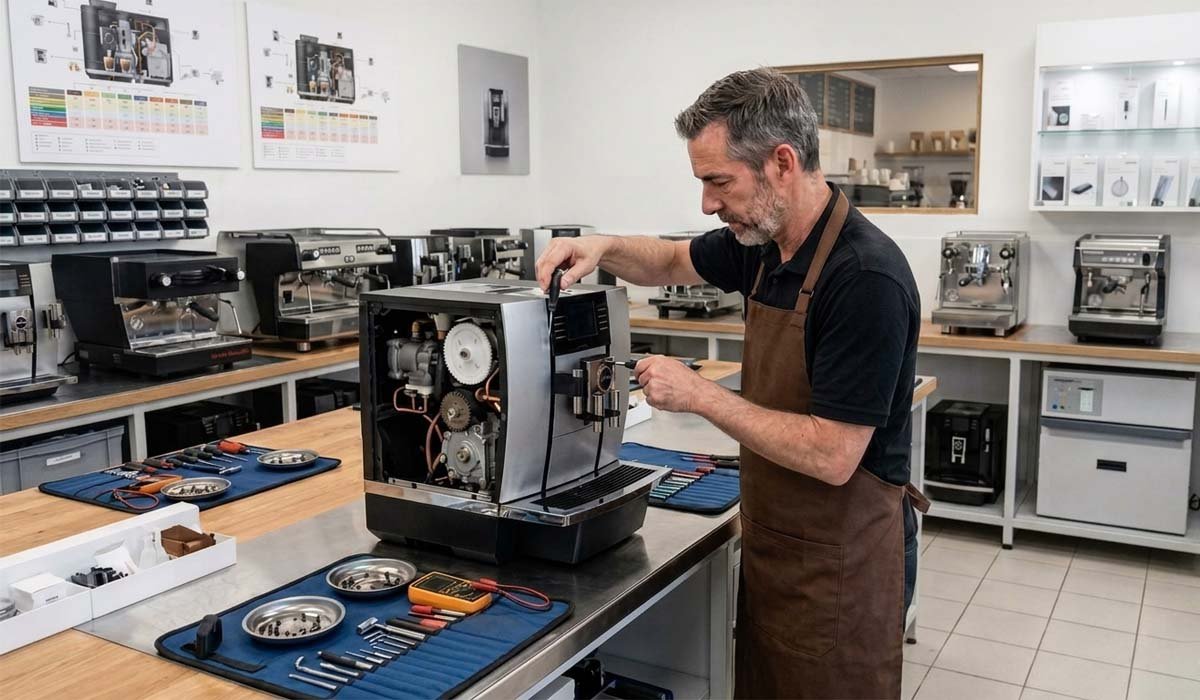
Jura J8 Espresso Machine Repair
The Jura J8 represents a pinnacle of automatic espresso technology, combining Swiss engineering with luxury features like the Sweet Foam function, the P.A.G.2+ grinder, and an interactive touchscreen display. For homeowners who treat their morning coffee as a sacred ritual, this machine delivers cafe-quality specialty beverages at the touch of a button. However, like any precision-engineered appliance that handles high heat, extreme water pressure, and finely ground organic material, internal components will inevitably experience wear and tear over time.
When a luxury appliance like the Jura J8 stops performing perfectly, it can instantly disrupt your daily routine. Understanding how your machine operates, recognizing the early warning signs of common mechanical and hydraulic failures, and knowing when to call in professional repair experts are essential steps to protecting your investment.
“Luxury automatic espresso centers are marvels of modern engineering, balancing fine electronics with heavy hydraulic forces. When performance drops, professional diagnostics are essential to prevent minor component wear from turning into an expensive system failure.”
Understanding the Jura J8 Architecture
To understand why the Jura J8 requires specialized attention, it helps to understand how it functions under the hood. Unlike traditional semi-automatic espresso setups that require a separate grinder and physical portafilter manipulation, the Jura J8 is a completely enclosed, fully automated ecosystem.
When you select a beverage, the machine initiates a highly coordinated sequence: The P.A.G.2+ Grinder dynamically adjusts its burr distance to the optimal setting for your chosen drink, actively monitoring the grind profile. The Internal Brewing Unit compresses the fresh grounds into a perfectly optimized puck. The High-Pressure Pump forces water through an advanced thermoblock heating element, utilizing Pulse Extraction Process (P.E.P.®) technology to pulse hot water through the grounds at precise intervals. Finally, the Fluid System routes the freshly brewed espresso and perfectly texturized or flavored milk through distinct internal channels to your cup.
Because all of these complex processes happen within a sealed chassis, normal wear can cause hidden issues. Over time, coffee oils, mineral scale, and friction can impact the tight tolerances required by Jura’s advanced internal systems.
Common Problems with the Jura J8
While the Jura J8 is engineered for longevity, specific issues frequently arise due to heavy daily use, environmental water quality, or natural component aging. Recognizing these symptoms early can prevent minor performance glitches from cascading into catastrophic component failures.
1. The Dreaded “Error 8” Display: Error 8 is one of the most common and frustrating error codes encountered by Jura owners across various generations, including the J series. This code indicates a communication or mechanical fault within the automatic brew group assembly. When the machine powers on, it runs a self-diagnostic sequence to cycle the brew group into its baseline position. If the internal motor meets too much resistance—often caused by dried coffee oils, friction, or degraded seals—the system halts operation entirely and triggers Error 8 to prevent structural damage.
2. Lukewarm Coffee or Inadequate Milk Temperature: An exceptional espresso or latte relies on precise thermal control. If your Jura J8 starts dispensing lukewarm espresso or flat, cool milk froth, it usually points to an underlying issue within the heating topology. The J8 relies on a compact, highly efficient thermoblock to flash-heat water on demand. Over time, calcium and magnesium minerals precipitate out of your water supply, adhering to the internal walls of the heating element. This mineral crust acts as an insulator, preventing the thermoblock from transferring adequate heat to the water and resulting in under-extracted, sour, or cold beverages.
3. Weak Espresso and Deteriorating Coffee Pucks: If your espresso suddenly tastes weak, watery, or lacks its signature thick crema, your grinder or extraction pressure may be compromised. A healthy Jura J8 should eject firm, well-defined, relatively dry coffee pucks into the internal grounds container. If you notice that the discarded grounds look like wet mud, or if the machine drops dry grounds directly into the tray without brewing, the internal timing, grinder calibration, or brew unit seals are no longer properly aligned.
4. Sputtering, Uneven Flow, or Clogged Spouts: The dual spouts on the J8 feature incredibly narrow fluid pathways to ensure a smooth, split pour. Fine coffee sediment can accumulate inside these distribution channels over months of steady use. When these pathways become partially blocked, water pressure forces its way through the remaining openings, causing the machine to sputter, spray, or dispense uneven amounts of liquid into your cups. In severe cases, a complete blockage can cause coffee to back up into the machine’s housing, potentially leaking down into sensitive electronics.
5. Milk Frothing Failures or No Steam Output: The Jura J8 is famous for its advanced milk texturing and Sweet Foam flavoring system. However, the automated milk system is highly sensitive to pressure variations and cleanliness. If your machine stops producing velvety micro-foam and instead produces large, bubbly hot milk—or fails to draw milk up from the container entirely—there is a disruption in the venturi vacuum system. This can be caused by micro-tears in internal silicone tubing, cracked connector nipples, or microscopic milk stone buildup within the steam path.
How Coffee Tech Espresso Machine Repair Solves the Problem
Attempting a do-it-yourself repair on a high-tech machine like the Jura J8 is incredibly risky. Jura utilizes proprietary hardware, specialized outer casing latches, and interconnected electronic sensors that can easily break if handled incorrectly. At Coffee Tech Espresso Machine Repair, we offer a premium, full-service diagnostic and repair solution that restores your luxury automatic coffee center to its factory-spec performance.
Our team does not rely on guesswork or temporary fixes. When your machine enters our care, we perform a comprehensive evaluation of its entire mechanical, hydraulic, and electronic framework. We connect your machine to specialized equipment to read internal error logs, trace electronic faults, and isolate the exact root cause of system failures like Error 8 or display glitches.
Our comprehensive process involves checking all fluid routes thoroughly. We inspect all internal high-pressure water lines, braided hoses, and 90-degree connectors for signs of structural weakness, replacing worn O-rings and proprietary seals to stop internal leaks before they damage surrounding circuitry. Our team deep-cleans, recalibrates, and lubricates the heavy-duty automated brew unit, replacing critical mechanical wear components to ensure smooth, effortless cycling and perfect puck compression. We clear out impacted coffee oils from the P.A.G.2+ assembly, inspect the grinding teeth for wear, and realign the burrs to restore the exact particle distribution needed for a rich extraction. Finally, we safely eliminate deep-seated mineral scale from the thermoblock pathways and execute rigorous temperature-logging tests to confirm your espresso and steam outputs meet Jura’s strict temperature standards.
By trusting your machine to professional technicians, you ensure that every repair is performed using proper tools and premium components, preserving both the operation and the long-term value of your asset.
Professional Service for Charlotte and the Surrounding Areas
Convenience is a core pillar of our luxury service experience. Coffee Tech Espresso Machine Repair is proud to be the premier repair provider serving Charlotte, NC, and its vibrant surrounding communities. We understand that shipping a heavy, delicate luxury espresso machine across the country is stressful and carries a high risk of transit damage. That is why we provide local, accessible service right here in the Carolinas.
Our comprehensive service area spans the entire greater Charlotte metropolitan region, making it easy for residential clients and corporate offices to get expert help quickly. We routinely provide prompt, reliable transport, drop-off options, or structured service support for clients across a wide range of neighboring towns and cities, including Huntersville and Cornelius, keeping the luxury kitchens of the Lake Norman area fueled with flawless morning lattes. We support Matthews and Mint Hill, providing dependable local support to homeowners who prioritize elite machine maintenance. Our reach extends to Fort Mill and Rock Hill, providing our expert repair services right across the state line to South Carolina coffee enthusiasts. We service Concord and Kannapolis, supporting busy professionals and commercial environments with fast turnaround times. Finally, we look after Gastonia and Belmont, ensuring that no matter where you are located west of the city, premium service is just a short drive away.
Wherever you reside in the Queen City region, our team is dedicated to providing an efficient, stress-free repair experience from your initial diagnostic inquiry to the moment you pull your first refreshed espresso shot.
Proactive Tips to Protect Your Jura J8
While professional maintenance is inevitable over a machine’s lifespan, you can dramatically extend the intervals between service appointments by practicing pristine daily hygiene.
- Always Use Clearyl Smart Filters: Utilizing Jura’s official water filters significantly reduces the rate of mineral buildup inside the thermoblock. Remember to replace them immediately when the machine prompts you.
- Never Skip the Milk System Clean: Milk fats and proteins dry out quickly and turn into a cement-like substance. Running the automated milk flush at the end of every day is non-negotiable for consistent frothing performance.
- Avoid Oily or Dark Roast Beans: Super-automatic machines struggle with very oily, dark-roasted coffee beans. The surface oils can gum up the internal grinder burrs and coat the walls of the brewing chamber, accelerating mechanical friction and leading to premature failures.